So here’s the deal.
When I talk about my trauma (and I do — because silence helps no one), I usually just say PTSD. It’s quicker, easier, and people kind of get the gist. And that’s what the diagnosis is, right? But if we’re being real-real? My actual diagnosis should be Complex PTSD — or C-PTSD, which honestly sounds more like a printer error than a mental health condition, but here we are.
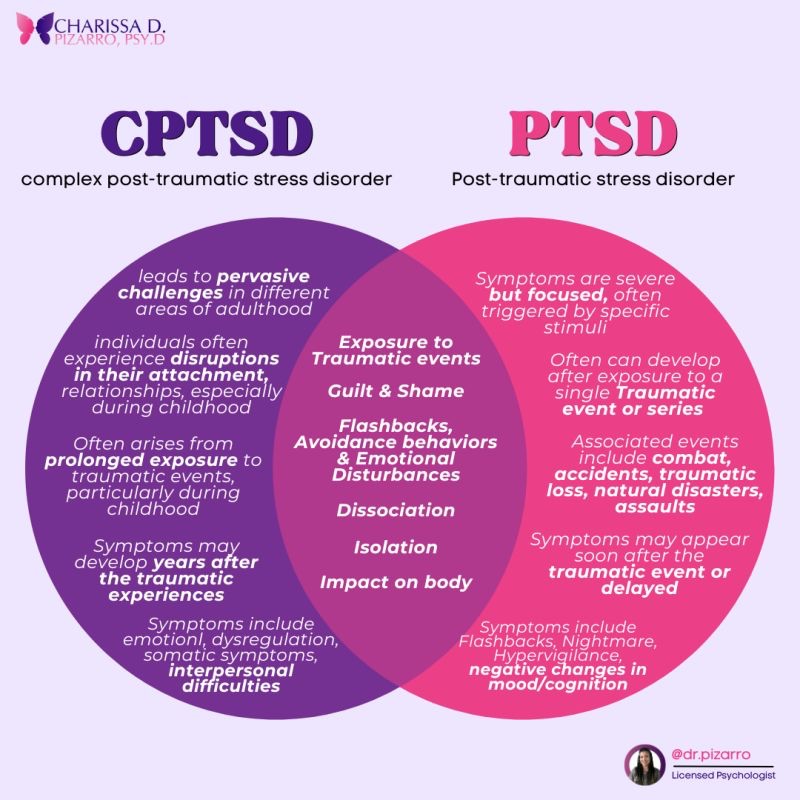
C-PTSD ain’t just a fancier version of PTSD. It’s the extra-strength, slow-cooked-in-chaos kind. Think of PTSD as the result of a one-time trauma, like a car wreck or a bad attack. Now take that and stretch it out over years. Add in the fact that the trauma came from people who were supposed to protect you. Stir in some emotional abuse, mental manipulation, and a sprinkle of “you can’t leave because you’re a child.” Now you’ve got Complex PTSD.
Yum, right?
What’s the difference?
PTSD is like stepping on a landmine.
C-PTSD is like growing up in a minefield and being told it’s your fault when you lose a limb.
PTSD can come from a single traumatic event — a mugging, a car accident, war.
C-PTSD is more about prolonged, repeated trauma, often starting in childhood.
And it doesn’t always involve fists or broken bones. Words can do just as much damage when they’re sharp enough and said often enough.
I didn’t know I had trauma for the longest time — I just thought I was resilient (which I am), a little high-strung (fair), and that I’d built some damn good walls (also true). But turns out, when your brain gets hardwired to survive instead of thrive, that leaves a mark. And healing ain’t just bubble baths and journaling. Sometimes it’s screaming into a pillow and fighting your way out of beliefs that were never yours to begin with.
Truth be told? C-PTSD is a whole different beast. It comes with trust issues, self-worth issues, emotion regulation problems (hi there, mood swings), and this weird feeling like you’re not really part of the world around you.
And don’t even get me started on relationships. C-PTSD will have you sabotaging the good ones and excusing the terrible ones — all while smiling and saying, “I’m fine.”
And here’s the kicker…
C-PTSD has been around for a while — we’ve known about it since the 1990s thanks to brilliant folks like Dr. Judith Herman — but the U.S. still hasn’t caught up.
That’s right. It wasn’t until 2018 that the World Health Organization officially added C-PTSD to its list of recognized diagnoses in the ICD-11, which is used worldwide. But here in America? We’re still dragging our feet. The DSM-5, the U.S. diagnostic Bible for mental health, still doesn’t give it a standalone listing.

So instead of calling it what it is, doctors in the U.S. often toss C-PTSD into a blender with PTSD, anxiety, depression, maybe a little BPD if they’re feeling spicy — and call it a day.
The result? A lot of people walking around undiagnosed, misdiagnosed, or feeling like they’re just too broken to be helped.
Here’s a newsflash:
“The U.S. still doesn’t officially recognize C-PTSD, but I live it. Daily.
Just because it’s not in your handbook doesn’t mean it’s not real.”
So what now?
I don’t live in shame about my diagnosis.
I don’t need pity.
But I do need people to understand that trauma isn’t always visible — and healing sure as hell isn’t linear.
If you’re walking this path too, you’re not broken. You’re rebuilding.
And if you’re loving someone with C-PTSD, bless your heart and thank you. Just know that we’re not dramatic — we’re surviving.
One honest conversation, one memory, one boundary at a time.
XOXO, Jani
Living. Healing. Thriving. And always telling the truth, even when it’s hard.
 Journeys With Jani
Leave a comment